Plan ahead Commercial · Toronto
Master Key System Design in Toronto
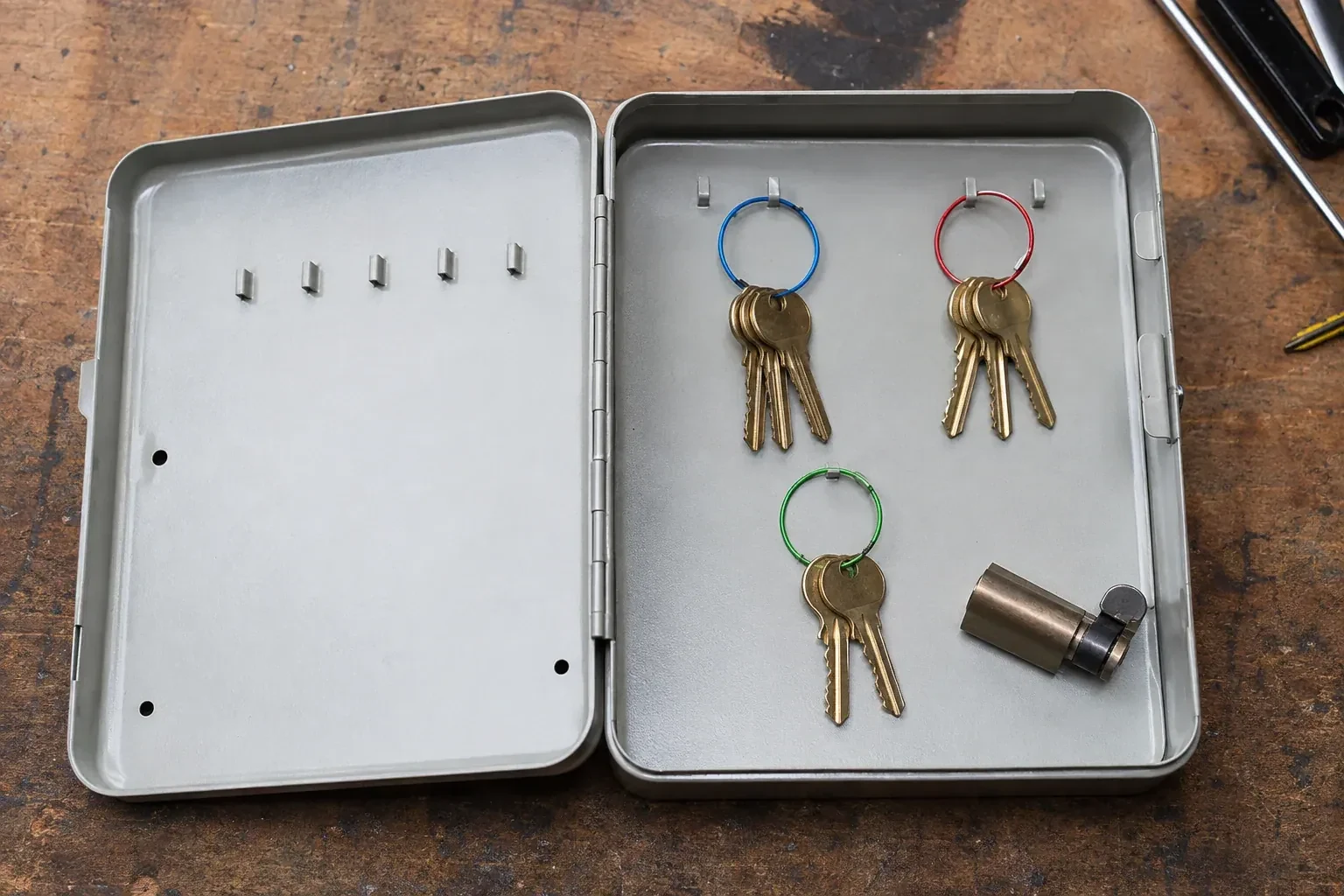
A self-storage operator wants the office, the tenant gate and the equipment shed on three different levels of access for staff, but every lock on the property currently answers to the same handful of interchangeable keys handed out over the years.
Call now · open 24/7(289) 806-2827In plain words
In a building shared by several tenants, departments or contractors, master key system design draws a clear line between who needs a broad master and who needs a single change key for their own door. Cleaners, maintenance staff, department heads and the owner typically sit at different levels, and the hierarchy is built to reflect that rather than to make life easier for whoever is issuing keys that week. The chart that results shows every level at a glance, which makes it far simpler to answer a basic question: who can currently get into this room.
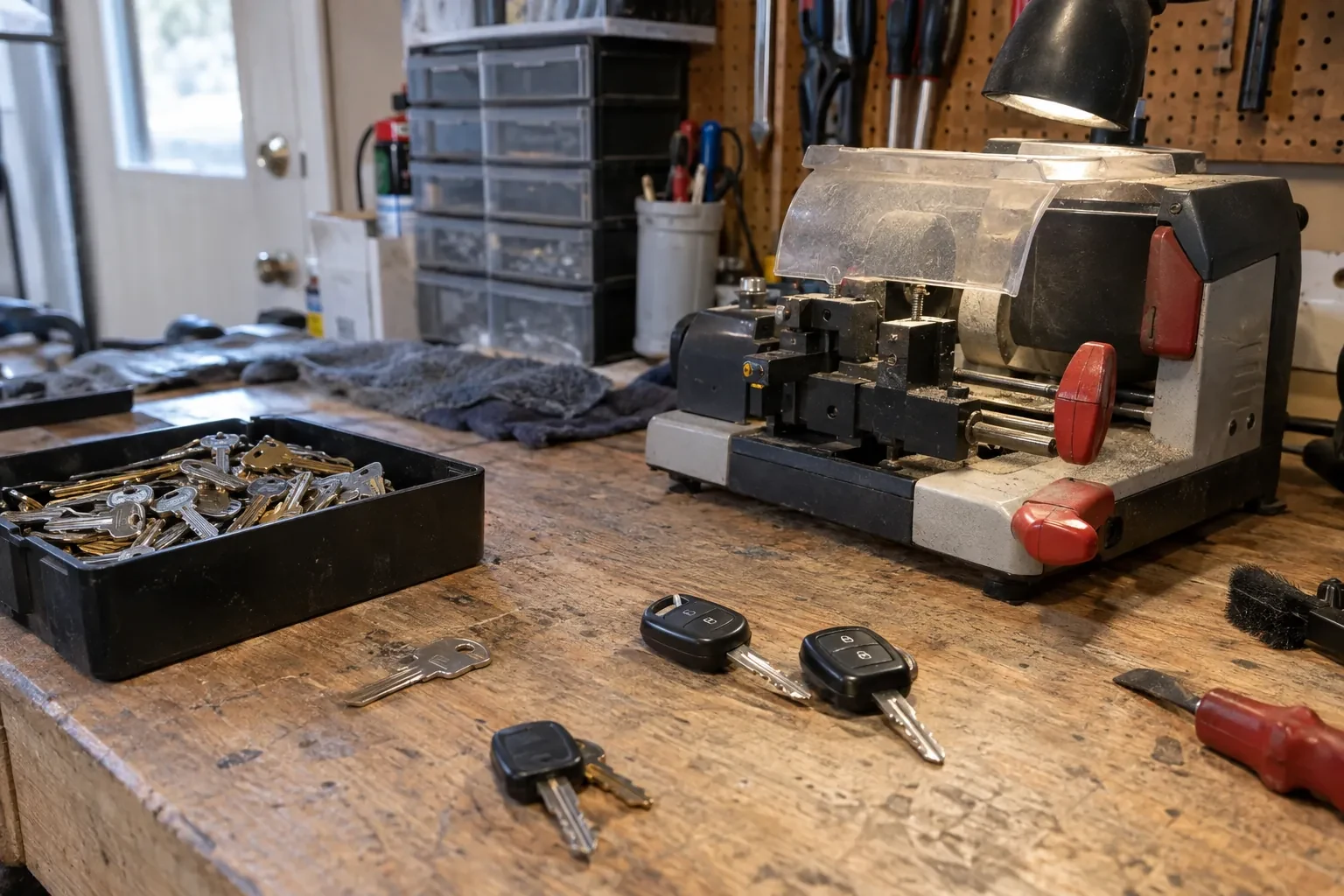
How the visit goesOn the warehouse floor, a shift supervisor's key opens the loading dock, the tool crib and the manager's office, though only the dock is really part of the job. Nobody planned it that way; the key was simply copied from whichever one was closest at hand.
Master Key System Design · Toronto
How the visit goes
- 1
Who needs to open what
Before any hardware is chosen, the locksmith records the organization's actual shape: which roles, departments or shifts need access to which doors, including exceptions such as a bookkeeper who needs the records room but not the loading dock. This map is built with the owner or manager, not guessed from existing keys, since existing keys often reflect years of ad hoc copying rather than any real plan. The output is a plain list of who should open what, which becomes the target the rest of the design is measured against, well before a single cylinder is touched or a key is cut.
- 2
Working around a building that is already occupied
In an occupied property, doors are rekeyed in a planned order rather than all at once, so a department is never left without a working key partway through a shift. Interim arrangements, such as a temporary key for a door being converted to a new level, are agreed in advance and closed out the same visit they are used. This staged approach lets a business keep operating through the change instead of losing access to parts of the building while the new hierarchy is being built.
- 3
A chart that answers the question on its own
Once the project is finished, a single question, who can get into this room, has a single answer, visible on the chart without needing to track down whoever issued a key years ago. Every level is listed against the doors it opens and the people or roles holding it, so the record stays useful long after the locksmith has left, rather than fading into the same guesswork the project was meant to replace.
In the van
- Change and master keys
- Locking chart storage cabinet
- Plug follower and key gauge
- Compatible replacement cylinders
- Bench test fixture
What affects the quote
- 1
Condition of the property's current keys
A property with a reasonably current, if informal, sense of who holds which key gives the assessment a shorter starting point than one where keys have been copied and reissued for years with no record at all. More reconstruction work at the start affects the overall quote.
- 2
Keyway chosen: standard or restricted
A restricted or patented keyway costs more in blanks and administration than a standard keyway, since duplication is controlled through the manufacturer's authorized record rather than cut anywhere. Higher-risk doors, such as records or cash rooms, often justify that additional control; lower-risk doors may not.
- 3
Whether hardware needs replacing for accessibility
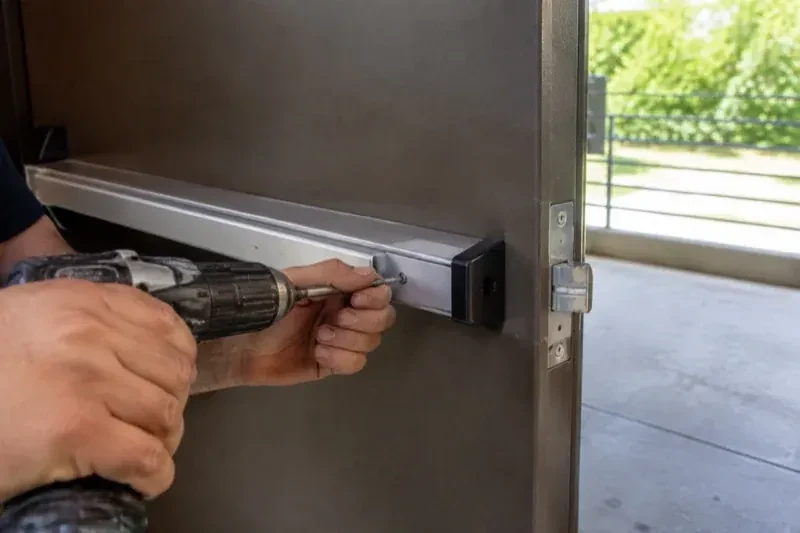
Doors on a barrier-free path of travel need lever or paddle-style hardware rather than round knobs, so a property with several such doors that currently have incompatible hardware has more replacement work folded into the project than one already fitted with compliant hardware.
Same fees day, night or weekend.
Master Key System Design: questions
Can cleaners or contractors get limited access without a master key?
Yes. A change key or a narrow sub-master covering only the areas they service is the usual approach, rather than handing over a level that reaches further than the job requires. Where the property uses keypad or card access alongside mechanical keys, a time-limited or role-specific electronic credential can serve the same purpose without a physical key changing hands at all.
Can electronic locks be part of the same system as mechanical keys?
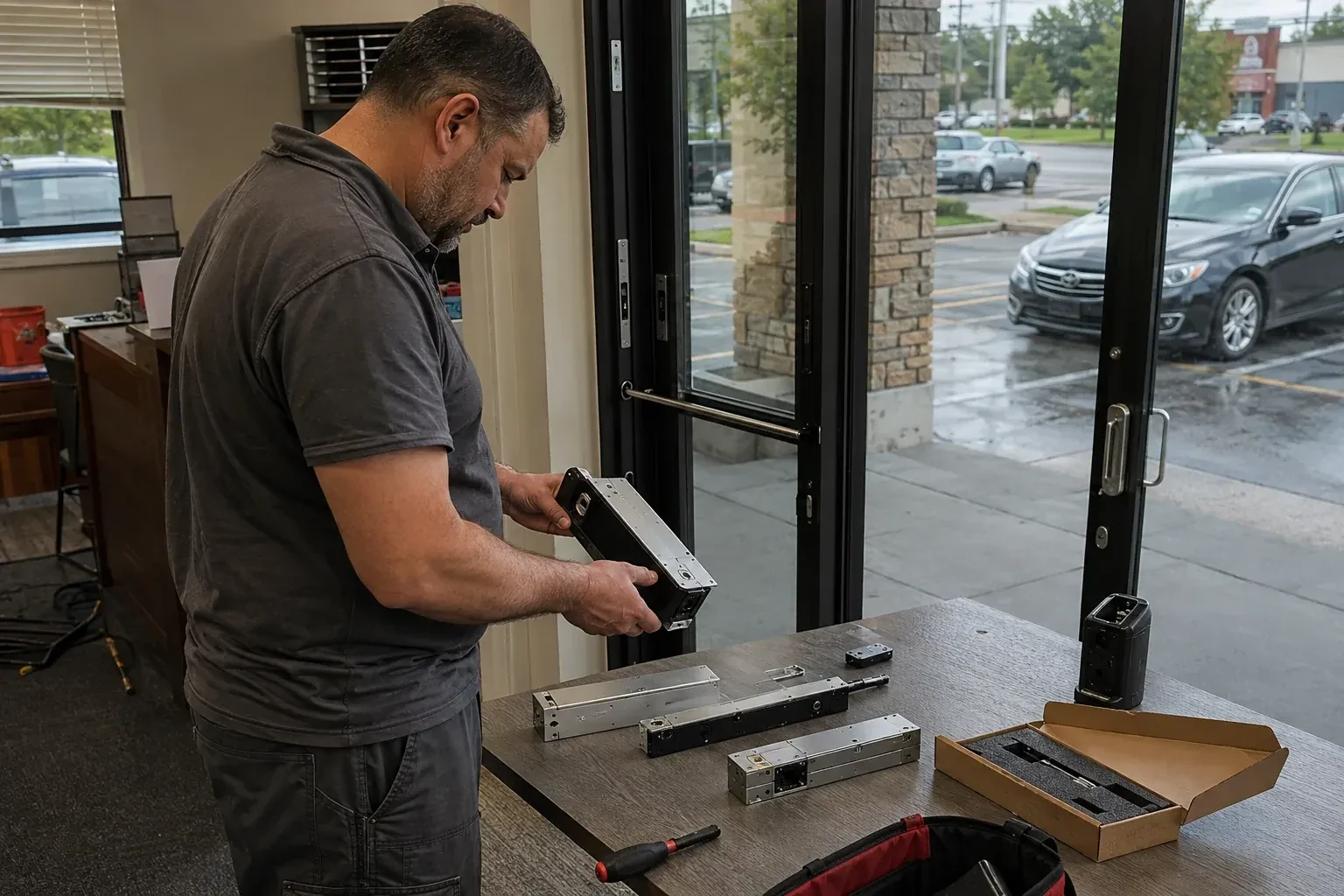
Yes. Where a property mixes keypad or card doors with mechanical cylinders, the access levels are designed to line up across both, so a department sitting at one sub-master level mechanically holds a matching level electronically. Mechanical override cylinders behind an electronic lock are pinned into the same chart as every other door, so one record still describes the whole property.
Do all the doors on my property need to be part of the master system?
No. Some doors, such as a private office or a room with a single regular user, can reasonably stay on their own key outside the hierarchy if there is no real benefit to including them. The assessment is partly about deciding which doors belong in the system and which are simpler left alone, rather than assuming every lock has to join.

Master Key System Design near you
Toronto, Ontario
Toronto information
- Town
- Toronto, Ontario
- In business
- 16 years
- Hours
- Open 24/7 · nights, weekends and holidays, same fees
- Phone
- (289) 806-2827
- Visits
- On-site assessment preferred. Request a visit or call.
What the census means at the door
58%
Older homes. About 58% of homes in Toronto were built in 1980 or earlier, according to the 2021 Census.
Older homes tend to have had many hands on their doors: owners, tenants, tradespeople, family. A locksmith visiting such a house pays attention to who holds keys now, and rekeying or a keyed-alike set often matters more than any new hardware.
23%
Single-detached houses make up about 23% of homes in Toronto (2021 Census).
Shared entrances mean fobs, intercoms and buzzers alongside conventional locks. A locksmith can service the mechanical side of those doors and advise on how the fob system and the cylinder work together when management asks.
Nearby
Open 24/7
Request a visit
A self-storage operator wants the office, the tenant gate and the equipment shed on three different levels of access for staff, but every lock on the property currently answers to the same handful of…
Call now · open 24/7(289) 806-2827- On-site assessment preferred
- Same fees day, night or weekend
- 16 years in business