Plan ahead Commercial · Cabbagetown
Panic & Exit Hardware in Cabbagetown
A padlock went on the stockroom's back door years ago for security and nobody has thought about it since, until the walkthrough this week pointed out that the same door is the room's only other way out.
Call now · open 24/7(289) 806-2827In plain words
Which device goes on a door depends on what the door already is. A single interior door usually takes a rim exit device and a simple pull or lever outside. Listed fire-exit hardware covers many tall, narrow-stile and fire-rated openings too, so a mortise or vertical-rod device is chosen for its latching arrangement or the door's own preparation, not from height or fire rating alone, and a fire-rated opening can never be held open by a mechanical dogging function. Reading the door correctly before ordering hardware is most of the job; fitting it well is the rest.
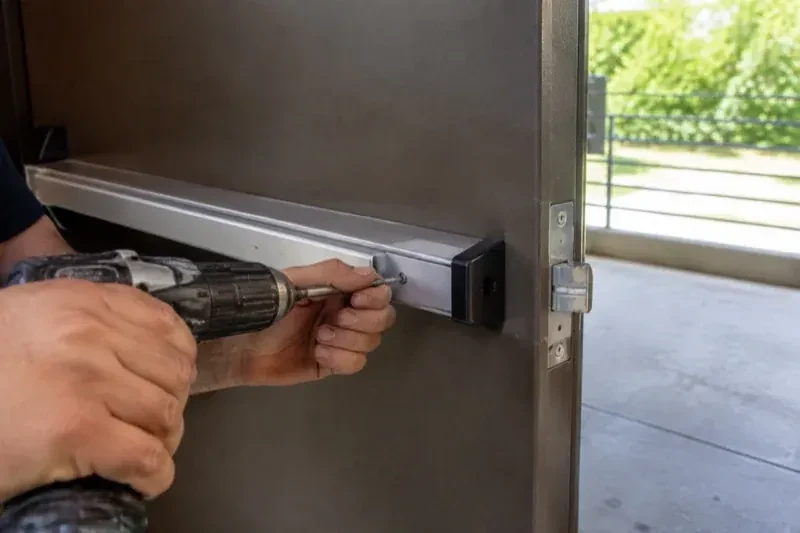
How the visit goesThe crossbar on the loading-dock door barely returns anymore. Someone has to lean into it with a shoulder, and twice this month it has stuck half-latched, propped by whatever was nearest.
Panic & Exit Hardware · Cabbagetown
How the visit goes
- 1
Occupancy, fire rating and the authority reviewing the space
The assessment records the occupancy type and calculated occupant load for the room the door serves, whether the door sits in a fire separation, and who the authority having jurisdiction is likely to be, whether that is a fire inspector, a building official or an insurer. These facts, not the door's appearance or its width alone, are what decide whether a releasing device is required, whether it must also be fire-rated exit hardware, and what documentation the finished installation should carry.
- 2
Testing release force and full latch engagement
Once mounted, every device is cycled by hand repeatedly, checking that the touchpad or crossbar releases the latch under a light, even push and that the door swings clear of its frame and any threshold without binding. The strike is checked from both sides to confirm the latch seats fully when the door is pushed closed, not only when it is guided into place by hand. Any adjustment the testing reveals is made on the spot, before the device is called finished.
- 3
A written record for the next review
The building now has a document naming every device fitted, its rating, the trim and any electrified function, and the tests each assembly passed on installation day. That record is what a fire inspector, an insurance reviewer or a new facilities manager will ask for, and having it ready saves reconstructing the history of a door from memory or from whatever sticker happens to still be on the case. It is worth keeping with the building's other life-safety paperwork.
In the van
- Force gauge
- Astragal and mullion hardware
- Coordinator for door pairs
- Outside trim (pull, lever or cylinder)
- Dogging key or keyed cylinder
What affects the quote
- 1
Access to the opening
A ground-floor commercial door is straightforward to reach. An opening behind scaffolding, up a stairwell with no elevator, or in a space still under active construction takes longer to work at.
- 2
Occupancy and code documentation needed
A project with a fire inspector's note or a building official's requirement attached usually needs a more detailed written record than a straightforward upgrade an owner requests on their own initiative.
- 3
Condition of the existing hardware
A device that only needs adjustment, cleaning and new fasteners costs less in labour than removing a seized or badly worn device and fitting a replacement in its place.
Same fees day, night or weekend.
Panic & Exit Hardware: questions
How is panic hardware different from fire exit hardware?
Panic hardware and fire exit hardware share the same push-to-release action, but fire exit hardware is additionally tested and listed for use on a fire-rated door assembly. That extra listing matters because a fire door has to keep an active latch bolt at all times; it cannot carry a mechanical dogging function the way ordinary panic hardware sometimes can, so the two are not interchangeable on a rated opening.
What happens with a pair of doors instead of one?
It depends on the pair. Some latch independently and need nothing extra. Where the hardware calls for a set closing order, a coordinator lets the two leaves close in the right sequence, letting the active leaf's device seat properly into a strike carried on the inactive leaf, or into an astragal. Alternatively, the centre mullion can be removed and a vertical-rod device fitted to each leaf, turning the pair into one wide exit. Whichever applies, both leaves are tested working together, not one at a time.
What counts as panic hardware?
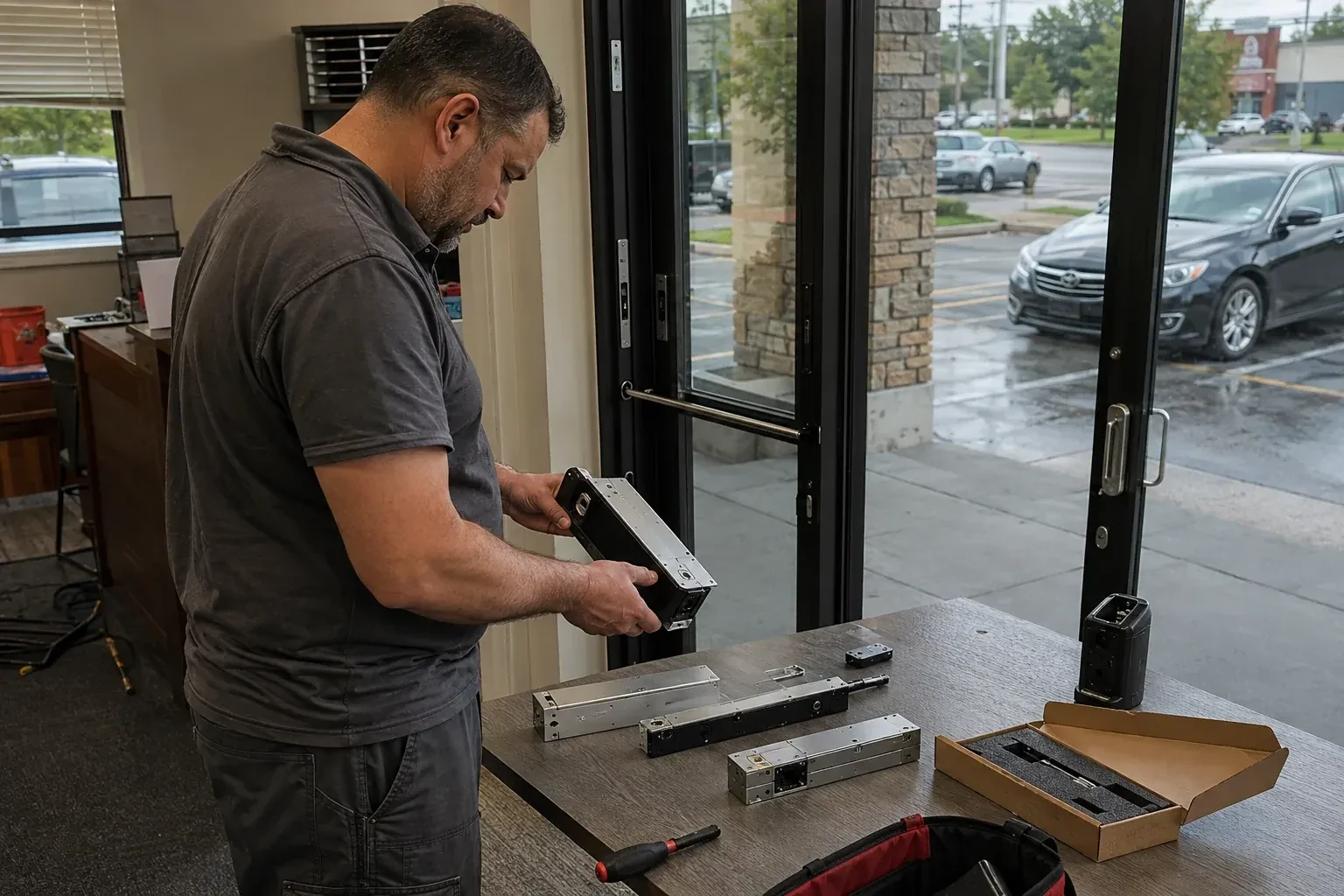
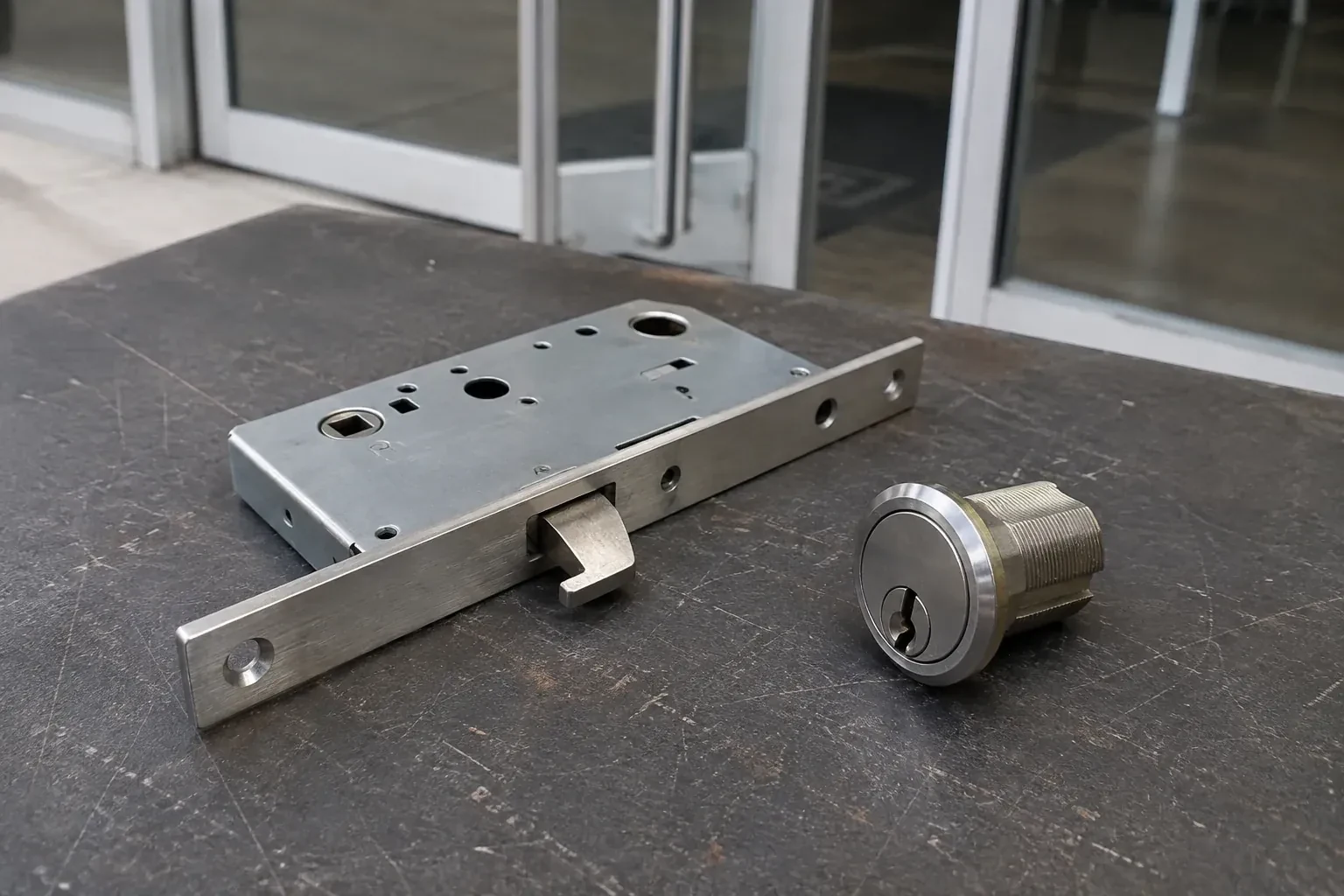
Panic hardware is a door-latching device, usually a crossbar or touchpad running most of the door's width, that releases the latch the moment someone pushes on it from the inside. It is built and tested so a light, even push anywhere along the bar opens the door, which is why it is chosen for doors serving rooms with enough people that fumbling for a key during an exit is not acceptable.
Panic & Exit Hardware near you
Toronto, Ontario
Cabbagetown information
- Town
- Cabbagetown, Toronto, Ontario
- In business
- 16 years
- Hours
- Open 24/7 · nights, weekends and holidays, same fees
- Phone
- (289) 806-2827
- Visits
- On-site assessment preferred. Request a visit or call.
What the census means at the door
58%
Older homes. About 58% of homes in Toronto were built in 1980 or earlier, according to the 2021 Census.
Older housing means older frames. Wood that has settled for years leaves strikes slightly out of line, so a bolt drags or needs a lift of the handle. A locksmith expects this and brings the shims, longer screws and strike plates to correct it.
23%
Single-detached houses make up about 23% of homes in Toronto (2021 Census).
Attached housing turns over more often than detached, so rekeying between tenants or owners is a constant. Because suite doors tend to be standard, the job is usually a straightforward pin change and a fresh set of keys cut on site.
Nearby
Open 24/7
Request a visit
A padlock went on the stockroom's back door years ago for security and nobody has thought about it since, until the walkthrough this week pointed out that the same door is the room's only other way…
Call now · open 24/7(289) 806-2827- On-site assessment preferred
- Same fees day, night or weekend
- 16 years in business